Orti Urbani Plot Allocation Models in Bologna and Turin Neighborhoods
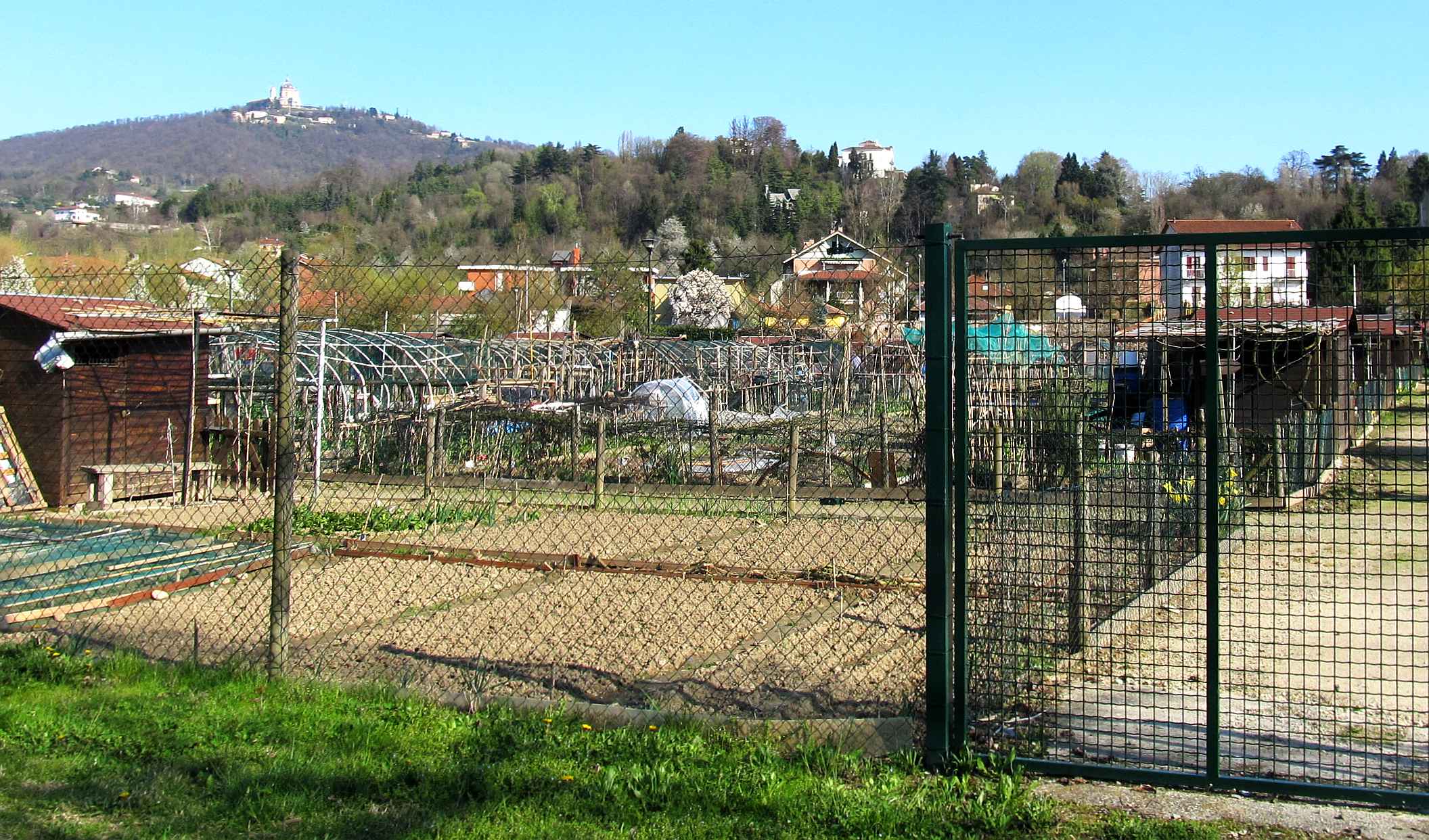
Italian municipalities that maintain orti urbani programs must navigate two overlapping demands: providing accessible growing space to residents on low incomes, and managing publicly-owned land under administrative rules that discourage permanent private occupation. The allocation models adopted by Bologna and Turin respond to both pressures, though through distinct regulatory traditions and land-tenure structures.
Bologna: The 1980 Benchmark
Bologna's municipal garden program dates to 1980, when Mayor Renato Zangheri authorised the first formal allocation of peripheral city land for collective cultivation. The initial design reflected the city's cooperative tradition: plots were modest in size (typically 50–60 sq m), assignments prioritised households with no private cultivable land, and the program was explicitly non-commercial.
The regulatory framework that evolved from that origin has since been adopted, in adapted form, by dozens of other municipalities across Emilia-Romagna and beyond. The core features remain consistent: residents submit applications demonstrating residency and income, lots are assigned by municipal decree, and plot holders sign a management agreement prohibiting sale, subletting, or commercial use of the produce.
Assignment Criteria in Practice
Contemporary Bologna-area regulations, including those published by nearby municipalities such as Almese (Piemonte, 2024) and Lissone (Lombardia, 2023), follow a scoring model where:
- ISEE (Equivalent Economic Situation Indicator) below a municipal threshold earns the highest priority score
- Household size above a defined threshold earns secondary points
- A maximum of one plot per household is enforced
- Applicants must not own or hold rights to other cultivable land within the municipality
- Consent for data processing under GDPR is mandatory at application
Assignment periods run three years, renewable once for a further three years. After six consecutive years, a plot holder must re-enter the waiting list. This rotation prevents permanent occupation and keeps the program accessible to new residents.
Turin: The Orti Generali Concession Model
Turin's approach developed along a different axis. Rather than allocating individual plots directly through the municipality, the city has increasingly used third-party concession agreements with social enterprises and cooperatives as the operational layer.
The most documented case is Orti Generali in the Mirafiori Sud district. The project originated as Miraorti in 2010, a citizen-led initiative on post-industrial land at the city's southern edge. By 2018, after sustained negotiation with the municipality, the project received a formal concession for 3 hectares — approximately 30,000 sq m — of public land.

The 170-Plot Network
Under the concession arrangement, Orti Generali manages 170 individual garden plots covering roughly 12 hectares of the broader site. An additional hectare of informal cultivation has been reorganised into shared educational and collective spaces. The social enterprise — directed by a landscape architect and a sociologist — allocates plots directly to residents while operating within the terms of the municipal concession.
The internal allocation model at Orti Generali differs from Bologna's in one significant respect: it includes explicit priority pathways for people in employment reintegration programs and those facing social vulnerability. This is a function of the enterprise's social cooperative status rather than a municipal requirement, but it has become a distinguishing feature of the Turin model.
Cascina Falchera Expansion (2024)
In November 2024, the City of Turin inaugurated a new allocation at Cascina Falchera, a historic farm complex in the city's northern districts. Approximately 100 plots were assigned to individuals, groups, and local associations at the start of the 2024–25 agricultural year. The Limen cooperative provided free horticultural instruction during the winter months as part of the allocation package.
Regulatory Variance Across Municipalities
While Bologna and Turin represent the most extensively documented cases, the regulatory landscape for orti urbani allocation is not uniform across Italy. Municipalities including Lissone, Prato, Vaie, and Lombardore have published their own management regulations in recent years, each adapting the core framework to local conditions.
Common points of variation include:
- Plot size: ranges from 40 sq m (some urban infill sites) to 80 sq m (peri-urban programs with more available land)
- Income thresholds: set locally; ISEE ceilings vary between €15,000 and €25,000 depending on municipality
- Renewal limits: most allow one renewal; a minority permit indefinite renewal subject to annual verification
- Mandatory cultivation: all surveyed regulations require active cultivation; plots left untended for 90+ days can be reassigned
- Prohibited crops: regulations in densely built areas often list specific prohibited species (notably hemp and plants with invasive root systems)
Concession vs. Direct Municipal Management
The distinction between Bologna's direct-municipal model and Turin's concession approach carries practical consequences. Under direct management, the municipality bears all administrative and maintenance costs; allocation lists are public record. Under a concession model, the operating entity (cooperative or social enterprise) handles day-to-day administration, which reduces municipal overhead but also introduces a layer of governance that is partially outside public scrutiny.
Researchers examining orti urbani governance in Italy have noted that concession models tend to produce more programmatically rich sites — integrating education, social services, and composting infrastructure — while direct municipal models deliver more consistent access and clearer procedural accountability. The two approaches serve overlapping but not identical urban populations.